


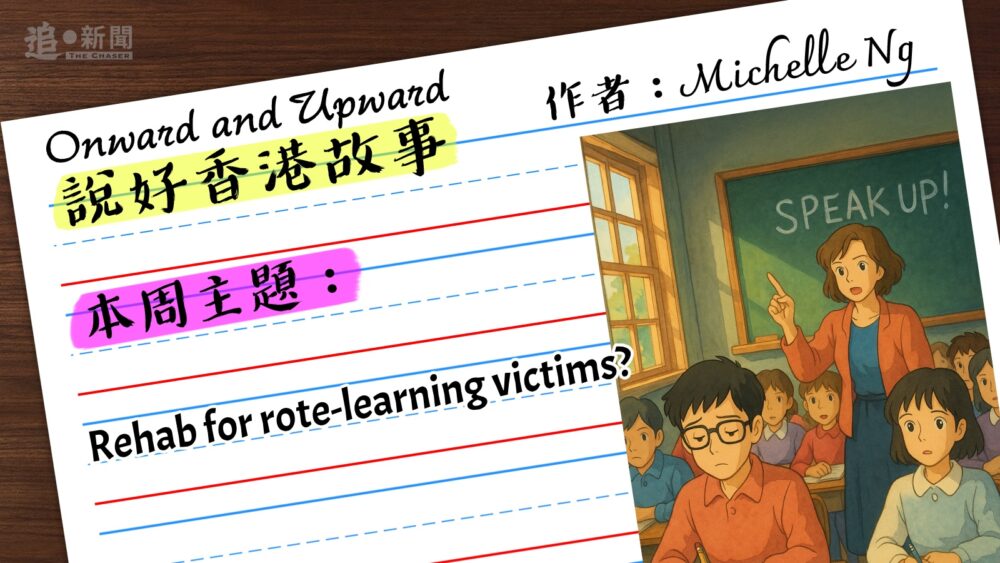
This week, I wrote the following letter to the parent of a student in an attempt to clarify an issue I’ve had with her son (whom I’ll call Peter). Like many kids raised under Hong Kong’s exam-oriented education system, Peter was taught to see teachers as authority figures and to work in silence. Even after his family emigrated to the UK a few years ago, these values have remained deeply ingrained. Now that he is in a more liberal learning environment where students are encouraged to speak up and challenge the teacher, he continues to default to his quiet, deferential style.
In my letter, I mapped out the potential disservice Peter may be doing to himself if he doesn’t move beyond this pattern. Since many Hong Kong children who have relocated to the UK face similar challenges, I thought it would be worthwhile to share my thinking with a wider audience.
This little story about the film director Stanely Kubrick often comes to mind whenever I reflect on the purpose of tutoring.
To prepare for the opening credits of The Shining (you can see the final results here: https://www.youtube.com/watch?
As a writer, my concern is whether my work will be dismissed by the leading experts in my field the way Kubrick dismissed the first film crew. As a tutor, my concern takes a different form: whether I’m doing enough to help my students get a real chance at earning the approval of those who will shape their careers in a decade or two.
It may be this philosophy that sets my tutoring apart from the typical tutoring center, the kind Peter used to attend, where “learning” consists of repeating the same exercise countless times for the sole purpose of achieving higher exam scores. The truth is, I’m already seeing my students as adults in corporate settings, competing for resources and recognition the way I once did (I worked in the business world for six years). My job, as I see it, is to help them develop strong communication skills, so their professional growth won’t be limited by poor communication.
This is why I’ve kept telling you I’ve been bothered by Peter’s silence during class, a tendency I attribute, rightly or wrongly, to the passive learning style he seems to have grown accustomed to. In the AI age, the cost of passivity is now higher than ever. Just this week, a well-known tech YouTuber, responding to widespread fears of AI-driven layoffs, urged his followers to identify something their companies aren’t working on yet —like the need for an AI audit department—and then “go to your organization’s leaders and say I would like to spearhead this department.” (https://www.youtube.com/
Maybe we can start by asking Peter to watch this video of a Canadian-born Chinese who graduated from a top computer science university in Canada. (https://www.youtube.com/
Michelle Ng
英國牛津大學畢業,前《蘋果日報》和《眾新聞》專欄作家,現在身在楓葉國,心繫中國大陸和香港。
多謝支持《追光者》,GoFundMe:
https://www.gofundme.com/f/pulse-hk-pulse-hk-crowdfunding-a-new-platform
Thank you for your support 🪔
🌟加入YouTube頻道會員支持《追新聞》運作🌟
https://www.youtube.com/channel/UC5l18oylJ8o7ihugk4F-3nw/join